


Cécile Seraud - Psykhé
Psykhé-delight
-
2025
-

-
9

“Please draw me a song!”
That's pretty much how it happened, like in The Little Prince. That's how Cécile Seraud's friend asked her for a composition to evoke the memory of her husband who died tragically and prematurely.
Except that her wish was granted beyond her expectations, because Cécile did not compose a single piece... but a whole album!
The friend in question knew who she was talking to: Cécile Seraud has been a musician since she was very young. She started with a conservatory training from the age of 5 to 17 in classical guitar, which she then dropped (without breaking it). Her dream remained to buy a piano, which she did once her house was built in Lorient. She then fell in love at first sight with the instrument.
Hence 3 magnificent piano albums, including this one, Psykhé – soul, in Greek –, made by immersing herself in the personality of the man and the life of his couple... But with modesty. A balancing act. The balance is achieved. The objective too.
The result is a record focused on the piano, very refined, not to say stripped-down: you can even hear the sound of keys being pressed sometimes. Let's let it resonate.
Only a trumpet comes besides ("Le Papillon de Nuit").
The album is generally instrumental, but we still hear some voices, which bring an extra humanity and depth. A man's voice and a woman's voice, as if to symbolize the couple remaining alive even though death has separated it. For the man with the very deep voice, the composer would have wanted Nick Cave (!), it will be Michel le Faou. For the woman, it will be the young Erelle Le Bars, who has just released her 1st album (Pluies).
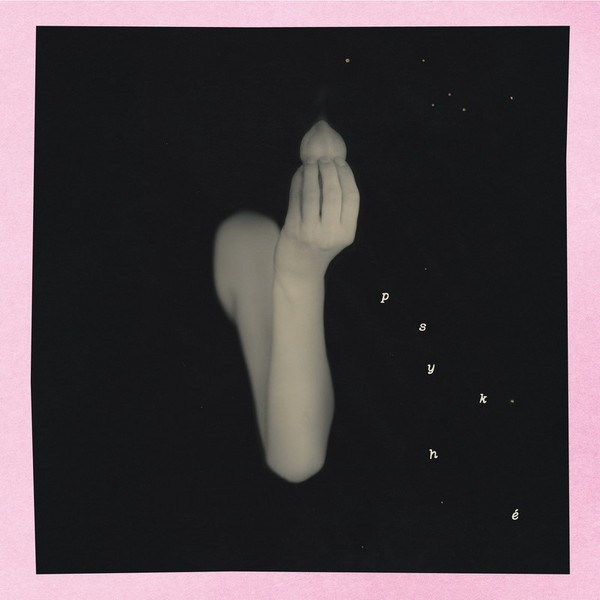
The graphic design is by Alice Hameau, to whom we already owe the design of Zaho de Sagazan, the enigmatic cover being from photographer Yamamoto Masao.
Finding their source in the violence and injustice of the event, the arpeggios almost mechanically follow their path towards appeasement ("Barcelone mon Amour"), echoing the deepest part of us, whatever our experience. This classic work promises beautiful others to come. Please, Cécile, draw me the rest!
-
The album is very short, barely more than half an hour, but if you consider that it should have been only one piece, you put things in perspective.
In only 2:17, the opening track ("Orphée") sets the tone, while differing from the rest by its muted atmosphere from beyond the grave, with this doctored monotonous voice in English. Which we will find a little later (end of "Two Hearts in New Zealand") for just a ‘go’, corresponding to the decision to let go off the beloved.
Like the soundtrack of a film, the instrumental pieces spontaneously take up the theme of the sung pieces – unless it's the other way around – creating a continuity, that of the soul that weaves in and out. -
Hurt
I Love your Smile
Flying Soul -
Wake up
-
-
The sentence
“Don't tell me what I should say” ("Hurt")
-
her
-
...And now, listen!
-
-
Created29 September 2026


